Being an Ide Historian

Ide cultural capital:

An inclusive approach to society, understanding and valuing diversity in all its many forms, e.g. cultural, religious, gender, economic
The confidence and desire to contribute to society in a meaningful way
A wide understanding and experience of classical and modern arts

Building on Ide’s cultural capital, the history curriculum has been organised around the themes of innovation and technology, monarchy, conflict and peace and society, culture and belief. We have built significant links with the community of Ide and and work closely with Historic England to develop our historical enquiries. We have also worked with Exeter University and Devon Development Education, to develop our curriculum to include the multicultural history of Devon.

Over the Early Years and KS1, children learn about the present and the past, focussing on changes, events and people, firstly within their own families and
expanding over the last 150 years. They learn that the country has a monarch and has done for a long time. They are introduced to the monarchs Victoria and
Elizabeth II (and George VI as her father and the monarch at the time of WWII). They are introduced to the first order concepts of chronology, interpretation,
causation and change and significance and can order the key events and figures learnt about chronologically.

In years 3 and 4, children revisit and build upon their understanding of key events such as WWII, and widen their chronological understanding significantly to cover a number of different time periods, including an introduction to prehistory through the Bronze age in Britain and the Indus Valley and the changes in Britain over the 1000 year period from 55BC with the arrival of the Romans. They learn about the Elizabethan age and a new monarch, Elizabeth I, and start to compare how the power and influence of the monarchy has changed.

In years 5 and 6, pupils extend their knowledge of ancient civilisations, including Ancient Greece, Egypt and Maya. They look closely at key aspects of society
during these times and reflect on how these have influenced key aspects of how society operates today, including how we show what we think and believe in.
They develop their understanding of prehistoric periods, recalling the Bronze age in Britain and learning about the Stone age and Iron age either side of this.
Pupils revisit the Elizabethan age and further explore the changing influence and power of monarchy with a focus on the arts and development of the theatre.
Additionally, pupils deepen their understanding of WWII, learning about D day and how lives were saved, comparing this to more recent advances in medicine which save lives now. When pupils learn about the exploration of space, they consider a range of figures who contributed and discuss why some are better remembered than others.

When pupils end their journey as historians at Ide, they will have a strongly developed sense of chronology, spanning from prehistory to the modern-day. They will frequently express both in discussion and in writing, the significance of what they have learnt about, with reference to the present day and the choices we make about how to live in society today. They will be analytical when examining sources and will be developing their own ideas about why studying history is important.

CHRONOLOGY

Pre-school
Retell a simple past event in the correct order, e.g. went down slide, hurt finger. (Ongoing) Talk about changes within living memory of themselves and their family. (Ongoing) Begin to make sense of their own life story and family’s history. (Ongoing) Vocabulary: baby, yesterday, little, earlier, now, then, next, before, after

Reception
Compare items from the past and the present (in relation to self, parents and grandparents) on a class timeline. Use words and phrases: old, new, now, then.

Year 1
Sequence two or more objects or events in time order independently, using a timeline. Use words and phrases: old, new, now, then, with new confidence and add past, present

Year 2
Put three or more people, events, or objects in time order on a timeline. Understand that events can be spaced along a timeline to show how far apart they were in time. Use words and phrases: past, present, chronological order

Year 3
Develop the use of timelines to represent events that occurred BC and AD. Use words and phrases: AD, BC, century, decade

Year 4
Place names and dates of a particular period on a timeline and start to compare overlaps in chronology. Use further vocabulary associated with the struggle for power of Britain at the time of the Romans, Anglo-Saxons and Vikings (invasion, settlement, conquest, empire)

Year 5
Use focussed timelines to demonstrate development in one key area: culture, technology or religion, use words associated with periods studies- e.g. Renaissance, Elizabethan, suffrage, the industrial revolution, pre-history.

Year 6
Use timelines to place events, periods and cultural movements from around the world. Compare and explain events that happened simultaneously in different parts of the world, such as Ancient Greece, Mayan civilisation, Ancient Egypt


INTERPRETATION

Pre-school
Comment and ask questions about aspects of the familiar world, such as the place where they live or the natural world.

Reception
Listen to stories and accounts of the past from known adults and answer questions about these

Year 1
Use pictures, stories and objects to describe differences between the past and present and find answers to simple questions.

Year 2
Listen to and look carefully at written and oral accounts and pictures or objects to find information about the past. Ask questions about source material and Identify the difference between fact and opinion

Year 3
Look at two versions of the same event; identify and discuss differences/similarities in accounts. Know that a primary source is a first account; whilst a secondary source is a product of the study of history- and is based on other sources

Year 4
Suggest where sources have come from (provenance) and reasons why there may be different accounts in history.

Year 5
Suggest reasons why some source material may be unreliable. Suggest the most reliable sources of evidence from a selection provided to help answer questions.

Year 6
Describe a key event from Britain’s past using a range of evidence from different sources. Explain how events or ideas have been represented with the intent to persuade.

CAUSATION AND CHANGE

Pre-school
Changes within living memory of themselves and their family. (Ongoing) Begin to make sense of their own life story and family’s history. (Ongoing)

Reception
Understand that things were different in the past- that the way people live has changed

Year 1
Suggest reasons as to why changes in the past happened (e.g. toys changed because of the invention of plastic or the development of technology)

Year 2
Understand that there are often several contributing factors that lead to a change (e.g. people began to go on more holidays at the seaside in Victorian times because of the invention of railways and because people had more leisure time)

Year 3
Suggest one or more reasons for why some significant changes in history occurred (e.g. events that led up to the start of WW2)

Year 4
To understand that there are short and long time causes which lead to a change (e.g. WW2 Long term cause could be the rise of fascist governments in Europe and short term cause could be Germany invading Poland in 1939)

Year 5
To understand that cause and change can occur on local scales as well as more widely (e.g. the arts flourished in Elizabethan England because of the renaissance across Europe but also due to Elizabeth I favouring the arts; commissioning new theatres and plays)

Year 6
Analyse multiple causes that lead to a change and explain the relationship between these with reference to scale, time frame and significance

SIGNIFICANCE

Pre-school
Develop an understanding of growth, decay and change over time. (Ongoing)

Reception
Understand events that have been important in your own life (birthdays, starting school, learning to walk/talk, siblings being born)

Year 1
Say why a person or event was important in the past- explaining what happened and why we remember it

Year 2
Talk about why a person or event was significant by talking not just about what they did but about how it changed things

Year 3
Talk about why a person or event was significant; how it changed things for other people, referring specifically
to who is affected and how

Year 4
Describe how people and events studied are significant, referring to local, national and international scale of impact

Year 5
Explain significance of events, people or developments in terms of immediate impact and how subsequent developments occurred as a result

Year 6
Explain historical significance by showing what events the past reveal about issues in history and contemporary life, with a view to making informed decisions for the future

ENQUIRIES AND DEVELOPMENT OF CONCEPTS

Year 1/2

Who helps who?

We learn about significant people who have contributed to saving lives- Mary Seacole and Florence Nightingale during the Crimean war and Edith Cavell
during WWII. We compare the Crimean war and WWII, including the medicine and tools available and the cleanliness of hospitals. We learn about the
monarchs Victoria , George VI and Elizabeth II and place these in chronological order.
Conflict and Peace, innovation and technology, monarchy

How will we get around in the future?

We learn about a range of explorers- including Matthew Henson, Ibn Battuta, Neil Armstrong and Amelia Earhart. We use sources to find out about why these
explorers were significant. We consider why exploration is still important today and how explorers will travel in the future.
innovation and technology,

Where does Ganesh belong?

We learn to use local sources to find out about the past, focussing on the statue of Ganesh in the RAMM in Exeter and exploring how important artefacts are in teaching us about the past. We discuss who owns artefacts and start to question whether historical artefacts should be kept or returned to their country of origin. We consider oral recounts and the range and reliability of sources on a local level. We learn about the difference between fact and opinion.
society, culture and belief

What did Brunel do for Great Britain?

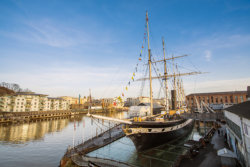
We learn about Brunel and the significance of his innovations including railways, bridges, and the SS Great Britain. We learn about how Brunel’s innovations led to changes in society including leisure time and holidays. We learn more about Queen Victoria and her connection with Brunel including the Crystal Palace at the Great Exhibition in 1851.
innovation and technology, monarchy, society, culture and belief

How can we play in different ways?

We explore, compare and contrast the way that children have played in the past. with a focus on the Victorian era and the development of new technologies
over the past 50 years.
innovation and technology, society, culture and belief

What do artists do?

We consider what art can tell us about history, looking at the differing use of ‘dots’ in art history. We study a range of artists including Hurst, Heron, Rilely and
Seurat. We learn about how Bridget Riley was an evacuee from London to Cornwall during WWII, and listen to and discuss 14-year-old Elizabeth II’s radio
broadcast to evacuees.
society, culture and belief, conflict and peace

Year 3/4

How do we find out about the past?

We learn about WWII, including the lead up to and announcement of the war. We learn about the role of the Prime Minister and revisit the role of the monarchy at the time of WWII. We focus on The Blitz in Exeter, and examine a wide range of sources, looking at oral recounts and photos and considering the range and
reliability of sources of information (primary and secondary).
Conflict and Peace, monarchy

What if Ide’s walls could talk?

We consider what invasion is and why it happens, learning about the changes in Britain over the first century AD. We learn about the Romans, Anglo-Saxons,
Vikings, and Normans, developing timelines to show the chronology including the overlap of these. We consider the legacy and value of the impact of these different
groups on Britain with a particular focus on the local area including Rougemont Castle, Exeter city walls, local place names, and the founding of Isca Dumnoniorum.
Conflict and Peace, innovation and technology

Why do we live here?

We learn about Dartmoor stone and the Bronze Age- for example, Grimspound, Hound Tor, considering why and how people settled in Devon. We explore sources of evidence that tell us how people lived in the Bronze age. We contrast Bronze age settlements in Devon with settlements in the area of the Indus Valley (modern day Pakistan/North India) at around the same period of history.
innovation and technology, society, culture and belief

Why did people travel in the past?

We learn about trade, conquest and exploration by sea at the time of Elizabeth I, including Drake and Raleigh and links to Devon. We learn about the representation of historical figures, contrasting accounts and changing perspectives over time, including both positive and negative aspects of trade, exploration and conquest. We consider monarchy and its changing power, comparing the power of Elizabeth I to Elizabeth II and Victoria.
Conflict and Peace, innovation and technology, monarchy

Why are more people becoming vegetarians?

We learn about the factors which have led to changes in what people have eaten in the past. We explore how people have hunted/gathered/farmed food, learning about the agricultural revolution and the invention of seed drill . We consider how religious and cultural beliefs influence what people choose to eat.
innovation and technology, society, culture and belief

Year 5/6

How do we find out about the past?

We learn about WWII, including the lead up to and announcement of the war. We learn about the role of the Prime Minister and revisit the role of the monarchy at the time of WWII. We focus on The Blitz in Exeter, and examine a wide range of sources, looking at oral recounts and photos and considering the range and
reliability of sources of information (primary and secondary).
Conflict and Peace, monarchy

What if Ide’s walls could talk?

We consider what invasion is and why it happens, learning about the changes in Britain over the first century AD. We learn about the Romans, Anglo-Saxons,
Vikings, and Normans, developing timelines to show the chronology including the overlap of these. We consider the legacy and value of the impact of these different
groups on Britain with a particular focus on the local area including Rougemont Castle, Exeter city walls, local place names, and the founding of Isca Dumnoniorum.
Conflict and Peace, innovation and technology

Why do we live here?

We learn about Dartmoor stone and the Bronze Age- for example, Grimspound, Hound Tor, considering why and how people settled in Devon. We explore sources of evidence that tell us how people lived in the Bronze age. We contrast Bronze age settlements in Devon with settlements in the area of the Indus Valley (modern day Pakistan/North India) at around the same period of history.
innovation and technology, society, culture and belief

Why did people travel in the past?

We learn about trade, conquest and exploration by sea at the time of Elizabeth I, including Drake and Raleigh and links to Devon. We learn about the representation of historical figures, contrasting accounts and changing perspectives over time, including both positive and negative aspects of trade, exploration and conquest. We consider monarchy and its changing power, comparing the power of Elizabeth I to Elizabeth II and Victoria.
Conflict and Peace, innovation and technology, monarchy

Why are more people becoming vegetarians?

We learn about the factors which have led to changes in what people have eaten in the past. We explore how people have hunted/gathered/farmed food, learning about the agricultural revolution and the invention of seed drill . We consider how religious and cultural beliefs influence what people choose to eat.
innovation and technology, society, culture and belief